Best AI Planners for ADHD in 2026: Tiimo, Structured, Lifestack and More
Independent and reader-supported. Some links may become affiliate links; see our disclosure. We don't accept payment for coverage.

Short answer: If you have ADHD and want AI help planning, start with Tiimo (built for neurodivergent users, AI breaks a brain dump into timed steps) or Structured (a cheaper visual timeline with AI day planning). Both have free versions, and the AI sits in Pro. If your energy swings are the real problem, Lifestack plans around wearable data. If you’d rather an app decide for you, Motion auto-schedules, at a much higher price.
We checked every price and free plan on the official pages and the US App Store on October 16, 2026. These are planning tools, not treatment: none of them claim to treat ADHD, and you should talk to a clinician about diagnosis and care.
What makes a planner work for ADHD
People with ADHD describe the same friction points in planning threads: starting tasks, judging how long things take, and dropping a system after one bad day. In the r/ADHD thread “productivity apps for ADHD folk”, one commenter says rigid to-do lists work on good days and punish you on bad ones, and others name Tiimo and TickTick as the tools that stuck. Reddit blocks automated access, so we read this thread through search snippets.
That points to four features worth looking for:
- Task breakdown: turning “clean the kitchen” into small steps.
- Time estimates: help with judging how long each step takes.
- Visual time: seeing your day as a timeline, not a list.
- Easy replanning: moving missed tasks without starting over.
At a glance
| Planner | Free version | Paid price (checked today) | AI feature that matters |
|---|---|---|---|
| Tiimo | Yes (AI in Pro) | $12/month or $54/year among several App Store prices | Brain dump to steps with time estimates |
| Structured | Yes (AI in Pro) | $29.99/year, $2.99/month or $99.99 lifetime | AI day planning, Replan |
| Lifestack | No (7-day trial on annual) | $10/month, $50/year or $120 lifetime | Schedules around energy from wearables |
| Reclaim | Yes, Lite | Starter $10/seat/month billed yearly | Defends focus time and habits |
| Todoist | Yes, Beginner | $59.99/year or $6.99/month | Ramble turns speech into tasks |
| Sunsama | No (14-day trial) | $17/month yearly or $22 monthly | Guided daily planning ritual |
| Motion | No (7-day trial) | From $19/seat/month on annual team billing | Auto-schedules everything |
| Morgen | No (14-day trial) | $15/month yearly or $30 monthly | AI suggests time blocks you approve |
Sources: Tiimo and Tiimo on the US App Store, Structured on the US App Store, Lifestack pricing, Reclaim pricing, Todoist pricing, Sunsama pricing, Motion pricing, Morgen pricing.
Tiimo: built for neurodivergent brains
Tiimo says it was built by and for neurodivergent people, with ADHD and autism in mind, and that you don’t need a diagnosis to use it (Tiimo). Its AI lets you type or speak what’s on your mind, then breaks it into steps, estimates how long each step might take and organizes them into a schedule.
The free version includes planning tools, to-dos and the focus timer on iOS and Android. AI task breakdown, custom widgets and advanced scheduling are in Pro, and the 7-day Pro trial comes with a yearly purchase. The US App Store lists Tiimo Pro at several price points, including $12/month and $54/year, and Tiimo says prices vary by location. Tiimo is rated 4.6 from about 20,900 ratings on the US App Store.
Watch for: in the r/ProductivityApps thread “Structured vs Tiimo?”, the poster says bugs pushed them away from Tiimo even though they preferred its calmer look and feel.
Structured: the low-cost visual timeline
Structured shows your day as a single timeline. The core timeline is free. Pro adds calendar sync, recurring tasks, AI day planning and Replan, which reschedules missed or forgotten tasks. The US App Store lists Pro at $29.99/year, $2.99/month or $99.99 lifetime, among other price points (US App Store). It’s rated 4.8 from about 167,600 ratings there.
In the same Reddit thread, the poster who switched from Tiimo says Structured felt more rigid and less calming, but they liked it enough to buy Pro. That’s a fair summary of the trade-off: Structured is fast and cheap, with less hand-holding.
Best for: visual planners who want a low price or a one-time purchase.
Lifestack: plan around your energy
Lifestack’s App Store listing is titled “AI Planner for ADHD.” It uses wearable data from devices such as Oura, WHOOP, Garmin, Apple Watch and Fitbit to predict energy, then time-blocks your to-dos and suggests meals, sleep and rest (Lifestack pricing). There’s no free plan; the annual plan has a 7-day trial. Pricing is $10/month, $50/year or $120 lifetime on its site, and the US App Store lists other price points too.
Best for: wearable users whose focus depends on sleep and recovery.
If you want the app to decide: Motion and Reclaim
Some people with ADHD find that fewer decisions helps. Two tools take scheduling off your plate:
- Motion auto-schedules tasks, projects and meetings into open calendar time. It has no free plan, and the 7-day trial requires a payment method with a $1 card hold. Teams pay from $19/seat/month billed annually; individuals pay from $29/month annually. Our Motion review covers the refund terms.
- Reclaim protects focus time, habits and breaks around your meetings, and its free Lite plan includes 5 AI agents. It works with Google Calendar and Outlook and has no native mobile app. See Reclaim vs Motion.
If you want a calmer ritual: Sunsama
Sunsama guides you through planning each morning and shutting down each evening, which suits people who need a routine more than automation. It has no free plan; Pro is $17/month billed yearly or $22 monthly after a 14-day trial with no card required. See Sunsama vs Motion.
If you mostly need capture: Todoist
Todoist isn’t an ADHD app, but Ramble, which turns speech into tasks, helps when ideas arrive faster than you can type. The free Beginner plan includes limited Ramble sessions; Pro ($59.99/year or $6.99/month on the US App Store) makes it unlimited and adds Task Assist.
How to pick without starting five trials at once
- Write down your one biggest friction: starting, time, energy or replanning.
- Match it: starting or time goes to Tiimo; replanning goes to Structured; energy goes to Lifestack; too many decisions goes to Motion or Reclaim.
- Use the free version for a week before you buy Pro, and set a calendar reminder before any trial renews.
- Keep it simple. One planner you open daily beats three you set up once.
Compare every option in the AI planners category, or see our Motion alternatives if price is the sticking point.
Apps mentioned
Tiimo
Visual planner built for neurodivergent brains, with AI that turns a brain dump into a plan.
Free plan: Yes · Paid from: $4.50/mo
Structured
Visual day timeline with AI day planning in its Pro tier.
Free plan: Yes · Paid from: $2.50/mo
Lifestack
Energy-aware AI planner that schedules work around your sleep and recovery data.
Free plan: No · Paid from: $4.17/mo
Sunsama
Calm, guided daily planner that pulls tasks from your other tools into one realistic day.
Free plan: No · Paid from: $17.00/mo
Motion
AI work suite that auto-schedules tasks, projects and meetings into your calendar.
Free plan: No · Paid from: $19.00/mo
Reclaim.ai
AI calendar agents that defend focus time, habits and breaks around your meetings.
Free plan: Yes · Paid from: $10.00/mo
Todoist
Long-running to-do list app with Todoist Assist AI and Ramble voice capture.
Free plan: Yes · Paid from: $5.00/mo
Morgen
Calendar and task planner with an AI Planner that suggests time blocks while you stay in control.
Free plan: No · Paid from: $15.00/mo
FAQ
What is the best AI planner for ADHD?
For most people we'd start with Tiimo or Structured. Tiimo says it was built by and for neurodivergent people and its Pro AI turns a brain dump into steps with time estimates. Structured is a cheaper visual timeline with AI day planning in Pro ($29.99/year on the US App Store). Try both free versions before paying.
Is there a free AI planner for ADHD?
Tiimo and Structured both have free versions, but their AI planning features are in the paid Pro tiers. Reclaim's free Lite plan includes AI agents for focus time and habits, and Todoist's free Beginner plan includes limited Ramble voice capture.
Tiimo vs Structured: which is better for ADHD?
Tiimo leans toward guidance, routines and a calmer visual style, and costs more ($12/month or $54/year among several US App Store price points). Structured is a simpler, cheaper timeline with a $99.99 lifetime option. In the Reddit thread we cite, one user found Tiimo calmer but buggy and Structured more reliable but more rigid.
Do these apps treat ADHD?
No. These are planning tools, not medical devices or treatment. Some are designed with ADHD in mind, but none of the pages we checked claim to treat ADHD. Talk to a clinician about diagnosis and treatment.
Should I use an auto-scheduler like Motion if I have ADHD?
It depends on whether you want the app to decide for you. Motion auto-schedules tasks into your calendar but has no free plan and costs from $19/seat/month on annual team billing. Some people find automatic rescheduling reduces decisions; others prefer a visual planner they control. Use Motion's 7-day trial to find out.
Some links may become affiliate links; see our disclosure. Prices change often; confirm on the official site.
Recommended reading and courses
Recommended reading and courses
Titles on using AI for personal growth and business. We earn from purchases of these titles. Ads don't affect our rankings or data.
Books
-
 Becoming Limitless Your AI Operating System for Amplifying Your Best Self in Every Life Area Get the book on Amazon
 -
 Identity Shift Why Your Goals Keep Failing and How to Rewire Who You Are With AI to Make Success Automatic Get the book on Amazon
 -
 AI Entrepreneurship 52 Weeks of AI Prompts and Actionable Inspiration to Skyrocket Your Business Get the book on Amazon
Courses
-
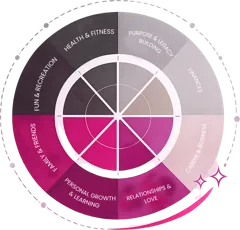 The Becoming Limitless System Work on all eight areas of your life together using AI tools, NLP methodology and a structured framework. Includes 8 life-area modules, the digital book, 40 master AI prompts and custom plugin GPTs. Explore the course
 - The Identity Shift A 90-day system to rebuild your internal operating system, with the full guided workbook, daily practice schedules and an AI coaching plugin GPT guiding you through each module. Explore the course