Headspace vs Calm for Anxiety and Sleep (2026): Content, AI and Price Compared
Independent and reader-supported. Some links may become affiliate links; see our disclosure. We don't accept payment for coverage.

Short answer: For sleep, Calm has the edge if bedtime stories help you drift off: its App Store listing says it has 100+ exclusive Sleep Stories. For anxiety, Headspace offers more layers of support: guided courses, SOS exercises, Ebb (an AI companion), and paid therapy and coaching. Headspace is also slightly cheaper on the US App Store at $69.99/year vs Calm Premium’s $79.99/year, though both list other price points.
We checked both apps’ official pages and US App Store listings on October 16, 2026. Neither app is medical treatment. If you’re in crisis in the US, call or text 988.
Quick comparison
| Headspace | Calm | |
|---|---|---|
| Price (US App Store) | $12.99/month or $69.99/year | $16.99/month or $79.99/year (lower price points also listed) |
| Free option | 14-day free trial | Some programs and features free |
| Signature sleep content | Sleepcasts, wind-downs, SOS for night waking | Sleep Stories with celebrity narrators |
| Anxiety tools | Courses, breathwork, Ebb AI companion | Breathwork, programs, daily sessions |
| AI you can talk to | Yes, Ebb | No chatbot in the consumer listing |
| Human support | Paid therapy and mental health coaching | Not in the consumer listing we checked |
| App Store rating | 4.8 from about 974,000 ratings | 4.8 from about 1.99 million ratings |
Sources: Headspace on the US App Store, Headspace subscriptions, Headspace sleep, Calm on the US App Store. Ratings as of October 16, 2026.
Sleep: stories vs a wind-down routine
Calm’s best-known feature is Sleep Stories, bedtime stories for adults. Its App Store listing says there are 100+ exclusive stories, with new content added every month, and names narrators including Matthew McConaughey, Stephen Fry and Bob Ross. Calm also offers sleep sounds, music and soundscapes such as rain and ocean waves.
Headspace describes Sleep by Headspace as a sleep app inside its main app, with guided sleep meditations, wind-downs, sleep music, soundscapes and sleepcasts, which are soothing audio stories set in calm places. It also offers SOS exercises for getting back to sleep when you wake in the night, and a Sleep Health course (Headspace sleep).
Our take: if a voice telling a story helps you stop thinking, Calm’s library is the bigger draw. If you want a routine that takes you from winding down to falling asleep, and help at 3 a.m., Headspace is more structured.
Anxiety: courses, breathwork and an AI companion
Both apps market anxiety support, and both include breathing exercises and meditations for stress.
Headspace organizes content into guided courses, including one on calming everyday anxiety, and lists 500+ guided meditations on its App Store page. It adds Ebb, which Headspace describes as an empathetic AI companion for self-reflection that recommends existing Headspace content. Headspace’s AI principles page says Ebb isn’t a substitute for a licensed therapist or mental health coach and doesn’t provide medical or clinical advice (Headspace AI principles). For more support, Headspace sells therapy with licensed therapists and text-based mental health coaching.
Calm offers breathwork, programs for issues such as social anxiety, daily sessions like Daily Calm, and mindful movement, per its App Store listing. It doesn’t offer a chatbot in the consumer app; Calm Health, the version for employers and health plans, has AI-guided journaling prompts.
Both App Store listings make claims about reducing stress or anxiety. We haven’t evaluated the studies behind those claims, so we don’t repeat them here.
Our take: if you want something to talk to between sessions, or a path to human support in the same app, Headspace offers more. If you mostly want to breathe and listen, Calm covers it.
Price and free options
On the US App Store, Headspace lists $12.99/month or $69.99/year, with Headspace Plus also listed (for example $94.99/year). Calm Premium lists $16.99/month or $79.99/year, with other price points such as $14.99/month and $69.99/year. Which price you see can depend on offers and region.
For trying before you pay, Calm keeps some programs and features free, with most content in Premium. Headspace has no free plan for full access, but its subscription page offers a 14-day free trial (Headspace subscriptions). Set a reminder before any trial renews.
Privacy
Headspace says it complies with HIPAA and GDPR, encrypts data and publishes AI principles. We haven’t summarized Calm’s privacy policy yet; read it before sharing sensitive details, especially in any journaling features. Neither app’s pages we checked state whether your data is used to train AI models.
Alternatives worth a look
- Insight Timer has a large free library and Reflect, an AI conversation partner. It says it doesn’t train AI models on your data. Premium is $59.99/year.
- Balance builds each day’s meditation from your answers, at $69.99/year.
- Aura mixes meditation, sleep, CBT and coaching tracks from many teachers.
- Wysa offers a free, anonymous AI chat with CBT-style exercises if you want structured anxiety tools rather than meditation.
See our full Headspace vs Calm comparison, Headspace alternatives and the mindset and meditation category.
Bottom line
Pick Calm for narrated Sleep Stories and a simpler listen-and-relax experience. Pick Headspace for structured courses, night-waking SOS exercises, an AI companion and the option of human support. Both offer a way to try first, so test each for a week of bedtimes before committing to a year.
Apps mentioned
Headspace
Large meditation library plus Ebb, an AI companion for reflection.
Free plan: No · Paid from: $5.83/mo
Calm
Sleep Stories and meditation library; AI works in the background on recommendations.
Free plan: Limited · Paid from: $5.83/mo
Insight Timer
Huge free meditation library with Reflect, an AI conversation partner.
Free plan: Yes · Paid from: $5.00/mo
Balance
Meditation coach app that assembles each day's session from your answers.
Free plan: No · Paid from: $4.17/mo
Aura
Meditation, sleep, CBT and coaching tracks matched to you with AI-driven personalization.
Free plan: Unknown · Paid from: $5.83/mo
Wysa
Anonymous AI chat for everyday emotions, with CBT-style exercises.
Free plan: Yes · Paid from: $6.25/mo
FAQ
Is Headspace or Calm better for sleep?
Calm is best known for Sleep Stories, with 100+ exclusive stories narrated by well-known voices per its App Store listing. Headspace offers sleepcasts, wind-downs, sleep music and SOS exercises for waking at night. If narrated bedtime stories help you, try Calm first; if you want a guided wind-down routine, try Headspace.
Is Headspace or Calm better for anxiety?
Both include breathing exercises and meditations for anxiety. Headspace adds Ebb, an AI companion, plus paid therapy and mental health coaching. Calm focuses on breathwork, programs and daily sessions. Neither app is a substitute for professional care.
Which is cheaper, Headspace or Calm?
On the US App Store, Headspace lists $12.99/month or $69.99/year, and Calm Premium lists $16.99/month or $79.99/year, with lower price points such as $14.99/month and $69.99/year also listed. Check the price shown to you before subscribing.
Do Headspace or Calm have a free version?
Calm keeps some programs and features free, with most content behind Calm Premium. Headspace doesn't have a free plan for full access, but its subscription page offers a 14-day free trial.
Does Calm have an AI chatbot like Headspace's Ebb?
Not in the consumer app listing we checked. Calm uses AI mainly behind the scenes for content recommendations, and Calm Health, the employer and health plan version, has AI-guided journaling prompts.
Some links may become affiliate links; see our disclosure. Prices change often; confirm on the official site.
Recommended reading and courses
Recommended reading and courses
Titles on using AI for personal growth and business. We earn from purchases of these titles. Ads don't affect our rankings or data.
Books
-
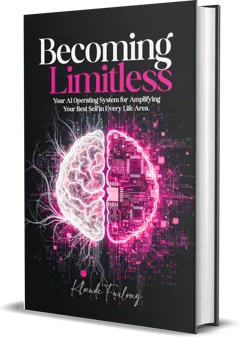 Becoming Limitless Your AI Operating System for Amplifying Your Best Self in Every Life Area Get the book on Amazon
 -
 Identity Shift Why Your Goals Keep Failing and How to Rewire Who You Are With AI to Make Success Automatic Get the book on Amazon
 -
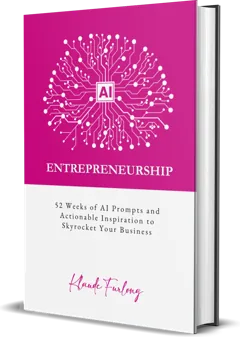 AI Entrepreneurship 52 Weeks of AI Prompts and Actionable Inspiration to Skyrocket Your Business Get the book on Amazon
Courses
-
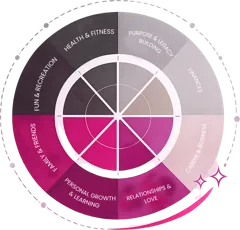 The Becoming Limitless System Work on all eight areas of your life together using AI tools, NLP methodology and a structured framework. Includes 8 life-area modules, the digital book, 40 master AI prompts and custom plugin GPTs. Explore the course
 - The Identity Shift A 90-day system to rebuild your internal operating system, with the full guided workbook, daily practice schedules and an AI coaching plugin GPT guiding you through each module. Explore the course